이 글 목차
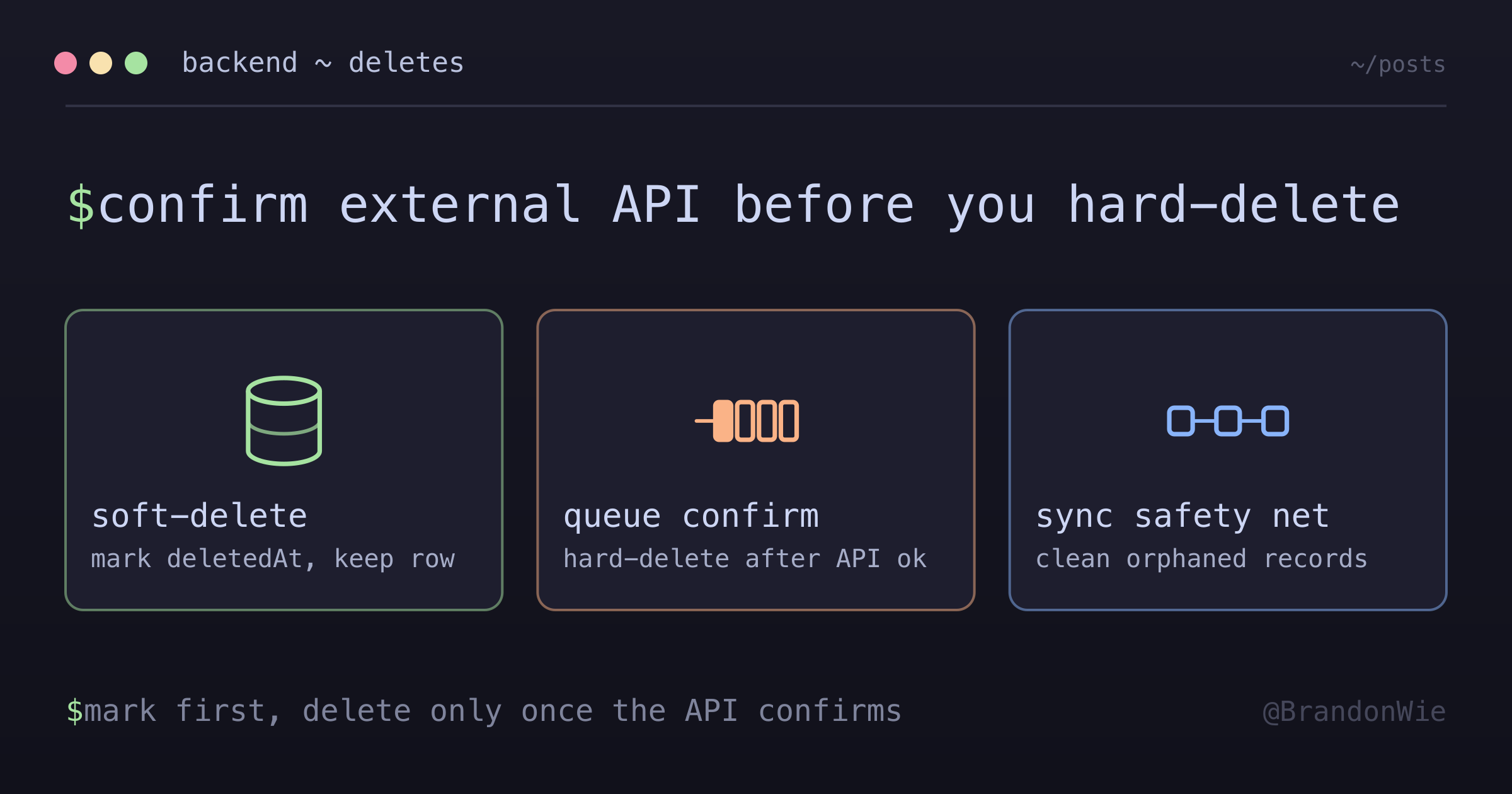
Two-Phase Deletion 패턴
rollback이 없는 시스템을 위한 안전한 삭제 패턴 — 먼저 soft-delete하고, 외부 API가 확인해 준 뒤에만 hard-delete해요.
행 하나를 지우는 건 쉬워요. 하지만 다른 시스템에서도 같이 사라져야 하는 행이라면 얘기가 달라져요. 앞쪽 절반이 이미 커밋된 뒤에 뒤쪽 절반이 실패할 수 있으니까요.
문제
캘린더 서비스, 결제 대행사, CRM처럼 외부 서비스에서도 지워야 하는 레코드라면, 즉시 hard-delete하는 건 아직 보내지도 않은 네트워크 호출에 거는 도박이에요.
// ❌ 위험: 외부 호출이 실패하면 복구 불가
async deleteEntry(id: number) {
  await this.entryRepo.delete(id);          // DB에서 이미 사라짐
  await this.calendarApi.deleteEvent(id);   // ...여기서 던지면?
}
되돌릴 방법이 없어요. 트랜잭션은 이미 커밋됐거든요. 로컬 행은 사라졌고, 원격 이벤트는 그대로 남아 있고, 둘이 연결돼 있었다는 사실을 기억하는 곳은 시스템에 남아 있지 않아요.
해결: soft-delete 후 확인
Phase 1: soft-delete (서비스 레이어)
레코드를 “임시 삭제”로 표시하고, 외부 호출은 큐에 넘겨요.
async deleteEntry(id: number) {
  const entry = await this.entryRepo.findOneByOrFail({ id });

  // soft-delete: 삭제 타임스탬프만 기록하고 행은 유지
  await this.entryRepo.softRemove(entry);

  // 외부 호출은 별도 경로에서 처리
  await this.eventQueue.add('delete', { entryId: id });
}
호출자 입장에서는 레코드가 즉시 사라져요. 행은 아직 남아 있고요.
Phase 2: hard-delete (큐 프로세서)
외부 API가 확인해 준 뒤에야 행이 실제로 사라져요.
async processDelete(job: Job) {
  const entry = await this.entryRepo.findOne({
    where: { id: job.data.entryId },
    withDeleted: true, // soft-delete된 행은 기본적으로 제외됨
  });

  await this.calendarApi.deleteEvent(entry.externalEventId);

  await this.entryRepo.delete(entry.id);
}
여기서 순서를 지탱하는 ORM 동작이 두 개 있는데, 둘 중 하나만 놓쳐도 패턴이 조용히
깨져요. softRemove는 DELETE를 실행하는 대신 삭제 타임스탬프를 기록하고
(TypeORM repository API), withDeleted는 프로세서가 그 행을 다시 찾을 수 있게 해줘요. soft-delete된 엔티티는 find 결과에서 기본적으로 빠지거든요
(TypeORM find options). withDeleted 없이 조회하면 job이 자기 레코드를 찾지 못해요.
외부 호출이 실패하면 job은 재시도하고, 재시도할 대상인 행은 그대로 남아 있어요. 순서를 이렇게 잡는 이유가 정확히 이거예요.
세 번째 phase가 아닌 안전망
큐는 job을 흘려요. API 호출과 hard-delete 사이에서 프로세스가 죽기도 하고요. 그래서 큐가 끝내지 못한 행을 주기적으로 훑는 정리 작업이 필요해요.
async reconcile() {
  const orphans = await this.findOrphans();
  for (const orphan of orphans) {
    this.logger.warn('Orphan detected', { id: orphan.id });
    await this.entryRepo.delete(orphan.id);
  }
}
여기서는 삭제보다 로그 한 줄이 더 중요해요. orphan 수가 늘어난다는 건 큐 경로가 망가졌다는 신호인데, 로그가 없으면 이 정리 작업이 자기가 치우고 있는 실패를 조용히 가려버려요.
흐름도
요청 → 서비스 레이어(soft-delete) → 큐 job
                                       ↓
                                  큐 프로세서
                                       ↓
                                외부 API 성공?
                                /
                              예            아니오
                               ↓              ↓
                         Hard-delete    재시도/알림
                               ↓
                       정리 작업(safety net)
언제 사용하면 좋을까
| 시나리오 | Two-Phase 사용? |
|---|---|
| 외부 API도 삭제해야 함 | 사용 |
| 데이터베이스만 삭제 | 불필요(직접 삭제) |
| rollback 메커니즘 없음 | 사용 |
| 중요한 사용자 데이터 | 사용 |
주요 구현 세부사항
soft-delete vs status 필드
soft-delete는 기본 쿼리에서 행을 숨겨요. 보통은 그게 원하는 동작이죠. 그런데 반복 일정(recurring series)에서는 이 전제가 무너져요.
반복 이벤트의 취소된 occurrence는 “없는 레코드”가 아니에요. “이 회차는 취소됐다”고 말하는 게 존재 이유인 레코드거든요. 이걸 soft-delete하면 취소를 담고 있던 행이 읽기 경로에서 안 보이게 되니까, 시리즈는 취소가 없었던 것처럼 렌더링돼요.
// 취소된 occurrence는 호출자에게 계속 보여야 하므로
// soft-delete 대신 status를 바꿔요.
if (isRecurringException(entry)) {
  entry.status = EntryStatus.Cancelled;
  await this.entryRepo.save(entry);
} else {
  await this.entryRepo.softRemove(entry);
}
정리하면 이런 기준이에요. soft-delete는 “사라졌지만 복구 가능하다”는 뜻이고, status 필드는 “여전히 여기 있고, 그 상태 자체가 답의 일부”라는 뜻이에요.
orphan 탐지는 양쪽 관계를 다 봐야 해요
행 하나를 지우면 서로 다른 두 종류의 레코드가 붕 뜰 수 있고, 찾는 방법도 달라요.
- 지워진 행을 부모로 가리키는 행
- 지워진 외부 이벤트 id를 JSON 컬럼 안에서 참조하는 행
// 지워진 행을 가리키는 자식 레코드
await this.entryRepo.delete({ parentId: deletedEntryId });

// JSON 컬럼 안에서 지워진 이벤트 id를 참조하는 레코드
await this.entryRepo.delete({
  externalData: { seriesId: deletedExternalEventId },
});
놓치기 쉬운 쪽은 두 번째예요. 첫 번째는 foreign key가 알아서 잡아주지만, JSON 페이로드 안에 묻힌 참조에는 제약 조건이 없어요. 결국 남는 건 “그걸 쿼리해야 한다는 사실을 기억하는 것”뿐이에요.
핵심 교훈
- 관심사 분리 — 서비스 레이어가 표시하고, 큐가 확인하고, 정리 작업이 훑어요.
- 다층 방어 — 큐 프로세서 + 정리 작업이면 실패 하나가 데이터 손실로 이어지지 않아요.
- orphan 로깅 — 놓친 정리 작업을 볼 수 있는 유일한 창구예요.
- status는 삭제가 아니에요 — 의미도 다르고, 읽기 경로에 미치는 영향도 달라요.
- 기존 잘못된 데이터를 염두에 두기 — 패턴이 생기기 전에 붕 뜬 행들도 빠져나갈 경로가 필요해요.